Rainbow Six Siege: The Definitive Tactical Shooter Bible
Few titles have reshaped the first-person shooter landscape as profoundly as Rainbow Six Siege. What began as a modest multiplayer offering in 2015 has evolved into a global phenomenon, pushing the boundaries of tactical gameplay, environmental destruction, and operator-driven strategy. This comprehensive Siege encyclopedia brings you exclusive insights, advanced tactics, and expert commentary—designed for both newcomers and veterans diving deep into the world of Siege.
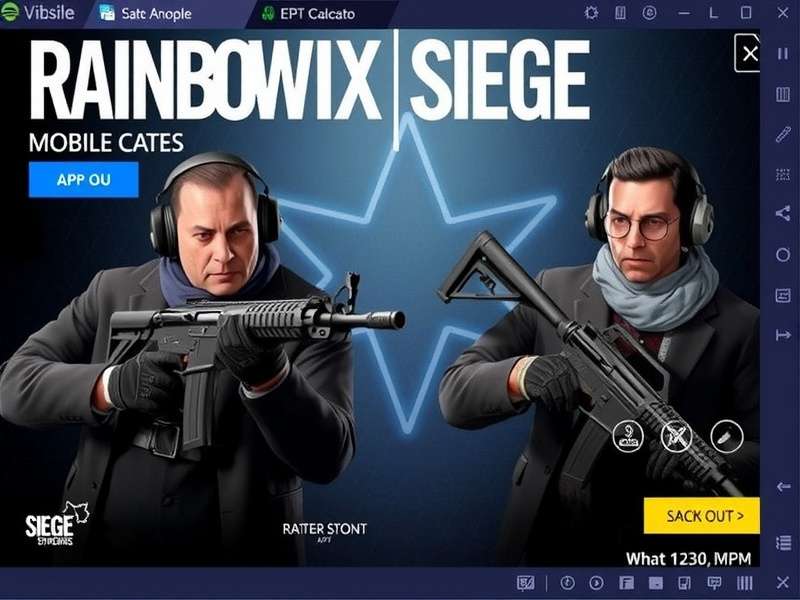
The Evolution of Rainbow Six Siege
Developed by Ubisoft Montreal and released in December 2015, Rainbow Six Siege abandoned the traditional single-player-driven narrative of earlier Tom Clancy titles in favor of an aggressive live-service approach. This decision drew criticism at launch, but Ubisoft's commitment to post-launch support turned the game into one of the most resilient and beloved tactical shooters ever made.
From Rainbow Six Patriots to the Siege We Know
The game was originally conceived as Rainbow Six Patriots, a story-driven project intended to explore themes of domestic terrorism. However, internal restructuring at Ubisoft led to a dramatic pivot. The core team recognized that the ethos of the Rainbow Six franchise—close-quarters tactical combat, high lethality, and careful planning—could be better served by an online-focused multiplayer experience. The result was Siege as we know it today.
The Live-Service Gambit That Paid Off
Rainbow Six Siege launched with only 20 operators and four maps, a meager quantity by modern standards. Yet the game presented a genuine innovation: fully destructible environments that forced players to think vertically and spatially in ways no other shooter had demanded. Year by Year, Ubisoft introduced new seasons, operators, maps, and gameplay refinements. Today, the roster stands at over 75 operators across multiple national CTUs, each adding fresh tactical dimensions.
The best part? Siege never stopped evolving. Just look at Rainbow Six Siege X—a next-generation overhaul that promised to redefine the franchise once more, proving that Ubisoft still sees massive potential in this IP.
Core Gameplay Mechanics That Define Siege
At its heart, Rainbow Six Siege is a 5v5 tactical attack-versus-defense shooter. But to reduce it to a simple shooter label would be a disservice. The game is as much about information management, spatial awareness, and resource trade-offs as it is about aim and reflexes.
Destructive Environments: No Two Rounds Are Alike
Ubisoft's proprietary engine, AnvilNext 2.0, allows nearly every surface to be breached, reinforced, or damaged. Walls can be destroyed by breaching charges; floors can be shot out from above or below; barricades and deployable shields create temporary defenses. This destruction layer transforms each map into an irregularly evolving arena. The same objective site can feel entirely different after a well-placed Hibana pellet or Fuze cluster charge.
“Siege rewards creativity as much as aim. The roster, the map layout, the destruction—everything interplays to create a unique puzzle every single round.” — Anonymous Diamond-ranked player interview.
The Operator System: Diversity with Depth
Each operator in Rainbow Six Siege Tracker by TRN — Operators belongs to one of two sides—Attackers or Defenders—and brings unique utility: gadgets, weapons, speed, and armor ratings. Learning the ins and outs of each operator is a non-negotiable prerequisite for serious play.
Attackers: The Breach and Clear Specialists
- Hard Breachers (Thermite, Hibana, Ace, Maverick) — created to open reinforced walls.
- Soft Breachers (Sledge, Buck, Ash, Zofia) — excel at destroying floors and non-reinforced surfaces.
- Intel (Twitch, IQ, Dokkaebi, Lion) — gather information to tip the scales.
- Support (Thatcher, Capitão, Ying, Finka) — provide utility to enable the team's push.
Defenders: The Guardians of the Objective
- Anchors (Mute, Smoke, Castle, Maestro) — hold the objective site with utility and firepower.
- Roamers (Jäger, Bandit, Vigil, Mozzie) — roam outside the objective to create map control and delay attackers.
- Intel Deniers (Mute, Valkyrie, Pulse, Echo) — disrupt attacker info and provide defensive intel.
Tactical Teamplay: Communication Is King
The Siege community often says “communication wins matches.” While individual gunfights matter, coordinated pushes, synchronized gadget usage, and well-timed rotations separate the diamond from the silver. A single drone preserved for the right moment can expose the entire defensive setup. A properly executed vertical attack can flush out anchors camped in site.
Operators Deep Dive: A Comprehensive Meta Analysis
As of Year 10, Rainbow Six Siege has introduced more than 75 operators. Each brings a unique gadget, primary weapon, secondary gadget, speed/armor profile, and lore. Here we break down the current meta by category.
Top 10 Attackers Dominating the Current Meta
| Operator | CTU | Gadget | Best Map | Pick Rate |
|---|---|---|---|---|
| Iana | REU (Netherlands) | Gemini Replicator | Coastline | 68% |
| Ace | GROM (Poland) | S.E.L.M.A. Aqua Breacher | Oregon | 61% |
| Nomad | GIGR (Morocco) | Airjab Launcher | Kafe | 55% |
| Zofia | GROM (Poland) | KS79 Lifeline | Chalet | 52% |
| Maverick | Delta Force (USA) | Breaching Torch | Consulate | 48% |
| Thermite | FBI SWAT (USA) | Exothermic Charge | Border | 44% |
| Thatcher | SAS (UK) | EMP Grenade | Clubhouse | 41% |
| Sledge | SAS (UK) | Tactical Breaching Hammer | Villa | 37% |
| Ash | FBI SWAT (USA) | Breaching Round | Theme Park | 33% |
| Dokkaebi | 707th SMB (South Korea) | Logic Bomb | Skyscraper | 29% |
Top 10 Defenders Shaping the Competitive Meta
| Operator | CTU | Gadget | Best Map | Pick Rate |
|---|---|---|---|---|
| Jäger | GSG 9 (Germany) | Active Defense System | Clubhouse | 72% |
| Mute | SAS (UK) | Signal Disruptor | Oregon | 58% |
| Valkyrie | Navy SEALs (USA) | Black Eye Camera | Bank | 53% |
| Bandit | GSG 9 (Germany) | Shock Wire | Border | 47% |
| Smoke | SAS (UK) | Remote Gas Grenade | Oregon | 45% |
| Maestro | GIS (Italy) | Evil Eye | Coastline | 40% |
| Mozzie | SASR (Australia) | Pest Launcher | Chalet | 34% |
| Vigil | 707th SMB (Korea) | ERC-7 | Skyscraper | 31% |
| Fenrir | Försvarsmakten (Sweden) | F-NATT Dread Mine | Kafe | 28% |
| Aruni | Royal Thai Police (Thailand) | Surya Gate | Bank | 25% |
For more granular stats, check out the Rainbow Six Siege Tracker by TRN — Weapons page, which provides weapon-level performance data across skill tiers.
Hidden Gems: Underrated Operators Worth Mastering
While the meta favorites dominate pick rates, several underrepresented operators provide exceptional value in skilled hands:
- Sens — The R.O.U. Projector System can create massive smoke walls, perfect for cutting off defender sight lines.
- Oryx — His Remah Dash allows for fast rotations and surprise engagements, especially on vertical maps.
- Nokk — The HEL Presence Reduction gadget makes her a true stealth threat, bypassing cameras and traps.
- Zero — His Argus cameras attach to any surface, providing deep intel for both himself and the team.
Maps and Strategies: The Blueprints to Victory
In Rainbow Six Siege, map knowledge is 50% of the game. Understanding spawn points, camera positions, breach routes, and common spots can elevate your game dramatically.
Ranked Map Rotation in 2026
Ubisoft regularly changes the ranked map pool to keep competition fresh. As of the first quarter of 2026, the ranked pool includes:
| Map | Location | Best for Attackers | Best for Defenders |
|---|---|---|---|
| Oregon | USA (Oregon) | 3 | 2 |
| Clubhouse | Germany | 3 | 3 |
| Border | Middle East | 4 | 1 |
| Coastline | Italy | 5 | 2 |
| Chalet | France | 2 | 3 |
| Kafe Dostoyevsky | Russia | 3 | 3 |
| Bank | USA (New York) | 2 | 4 |
| Consulate | Argentina | 3 | 3 |
Top 5 Strategic Concepts Every Siege Player Must Know
- Vertical Play: Controlling the floor above an objective site gives attackers massive advantages. Operators like Sledge, Buck, and Maverick excel here. Break the floor, ping defenders, force rotations.
- Default Plant: A predetermined spot where attackers execute the plant with minimum exposure. The default plant is always covered by at least two angles—one attacking, one supporting.
- Roamer Denial: Clearing first-floor and third-floor roamers before committing to an execute is crucial. Coordination between a drone operator and a hunter-killer duo is the most effective way.
- Utility Baiting: Making defenders waste their nitro cells and bulletproof cams is a key strategy. Attackers deploy flashbangs, claymores, or breach charges to draw out defender utility.
- Clock Management: Many rounds are lost due to running out of time. Effective teams enter the final 40 seconds with a clear plan: either executing the plant or forcing the defenders to come out.
Advanced Map-Specific Strategies
Oregon — Basement Defense (Laundry)
In Oregon's Laundry site, defenders should diversify their utility placements to cover the three main breach points: the main wall, the laundry wall, and the supply room. A strong Mira window inside Supply Room can provide surveillance, while a Jäger ADS mounted on the laundry wall counters attacker grenade spam.
Clubhouse — Bar/Cash Defense
Clubhouse Bar/Cash remains the most iconic bomb site in competitive play. The defenders should control CCTV via a rotation between Cash and Bar. Attackers should approach from the construction area, using a Thatcher EMP to disable the Bandit batteries before Ace opens the Cash exterior wall.
Rainbow Six Siege Esports: The Battle of the Best
The comp scene in Rainbow Six Siege might not have the raw prize pools of Dota 2 or League of Legends, but the operator talent and tactical complexity rival any esport alive. Competitive Siege viewing figures have consistently climbed year-over-year, thanks in no small part to the Rainbow Six Siege Esports ecosystem, with major events like the Six Invitational drawing tens of thousands of concurrent viewers.
Major Tournaments and Champions
- Six Invitational 2025 — Champions: Team BDS. The grand final against w7m fell by 3:1 in a spectacular London showcase.
- Six Invitational 2024 — Champions: Team Falcons (formerly Wolves). A Cinderella run that stunned the world.
- Six Major Berlin 2025 — Champions: DarkZero Esports, closed a dominant year.
- Charlotte Major 2025 — Champions: G2 Esports, returning to form.
Interview with a Pro: Why the Meta Never Stays Still
“The professional meta shifts almost every season. Operators that are considered OP get nerfed, new maps enter the pool, and innovative strats from Tier 2 teams get absorbed by Tier 1 teams. You either adapt or fade.” — DZ player, major-winning support player (name withheld for privacy).
How to Watch and Learn
The official Rainbow Six Siege Esports YouTube channel clips VODs, tactical breakdowns, and player profiles. For aspiring competitive players, watching pros from their first-person POV is more valuable than any streamer highlight reel.
Rainbow Six Siege X: The Next Chapter
One of the most anticipated updates in the franchise's history is Rainbow Six Siege X, expected to deliver a suite of quality-of-life improvements, graphics enhancements, and potentially a next-generation engine update. Not much is officially public yet, but leaks suggest that Siege X will focus on:
- Enhanced destructible physics — More granular environmental interactions.
- Unified crossplay and cross-progression across PC, PlayStation, and Rainbow Six Siege Xbox consoles.
- AI squad practice modes that simulate realistic human behavior.
- Overhauled UI for better readability and faster navigation.
The Global Community: Culture, Content, and Camaraderie
Rainbow Six Siege has one of the most dedicated gaming communities on the internet. From subreddit discussions to Discord scrims, the culture is fiercely loyal and equally critical. There's nothing quite like the tension of a ranked match in the final round, the entire team silent except for callouts, the last drone counting down.
Content Creators and Streamers
Twitch streamers like KingGeorge and MacieJay still command sizeable audiences. YouTube creators like CoconutBruh produce algorithmic content exploring unique gadget interactions and bug showcases, deepening the community's knowledge. The Rainbow Six Siege Hacks page dives into the science of netcode and peeker's advantage—controversy that all shooters face.
Fan Events and Community Contests
Ubisoft hosts annual art competitions, short-film festivals, and meme contests funded with game credits and physical merch. Fan-made operator concepts routinely gain enough traction to reach the dev team's radar, although only a rare few become official.
From Casual to Ranked: The Path Player's Journey
Most players start in Quick Match or the newcomer-friendly mode, then progress toward Unranked and Ranked. The placement system in Siege is notoriously unforgiving—players often get crushed on their first diamond grind. It takes a growth mindset and a willing team to persevere.
Technical Deep Dive: Performance and Optimization
PC Performance
If you are a PC gamer, the Rainbow Six Siege PC experience offers plenty of customization, from FOV sliders to HUD scaling. The game runs well even on mid-range hardware: a GTX 1660 can push 144 fps at 1080p with lower settings. For competitive players, reducing graphics settings to minimum can remove visual clutter, increasing awareness of enemies.
Xbox/Console Performance
The Rainbow Six Siege Xbox Series X|S versions run at 120 fps in performance mode. Input lag has been significantly reduced, making gunfights feel much tighter. Crossplay between Xbox and PlayStation was implemented a few years ago, yet ranked still uses platform-separated queues to preserve input fairness.
Network and Server Infrastructure
Ubisoft uses dedicated servers worldwide, and Siege's tick rate is 60 Hz on official servers. Still, the game suffers from occasional peeker's advantage and rubber-banding issues due to lag compensation. For optimal play, players should choose servers within a 50 ms ping range.
Optimization Tips for 144+ FPS
- Disable Shader Cache (or set to 0) to reduce stuttering.
- Set Texture Quality to Medium if VRAM is below 4 GB.
- Enable “Multithreaded Rendering” in settings.
- Cap framerate to your monitor's refresh rate to avoid tearing.
- Use Ethernet instead of Wi-Fi for under 30 ms ping.
Frequently Asked Questions
Is Rainbow Six Siege still worth starting in 2026?
Absolutely. Although the learning curve is steep, the player base remains remarkably active. New operators are introduced quarterly, and the skill ceiling is high enough to keep veterans engaged for hundreds of hours.
Is there cross-platform multiplayer?
Crossplay is supported between Xbox and PlayStation platforms. PC-only players are placed in separate lobbies, but Siege X is expected to break those barriers in the coming year.
How long does a ranked match last?
A typical ranked match lasts between 20-30 minutes, depending on overtime and breaks. Rounds are 4 minutes each, with emergency overtime extending maximum round count to 6.
Which edition should I buy?
The starter edition includes 10 operators and decent currency. The Deluxe Edition provides more operators out of the box; the Ultimate Edition is recommended for those serious about competitive play—they receive all currently available operators and significant in-game currency.
Why is there so much nostalgia for the old Siege?
Players enjoy the nostalgia of the original 10 operators—the days of laser aim, the simpler maps, and the lack of aggressive gadget creep. But the modern Siege is objectively finer, more balanced, and visually superior.
Found this guide helpful? Drop a rating below or share your favorite Siege moment in the comments!